
What Insurance Do You Need When Buying a Coastal Home in Northwest Florida?
Florida insurance is one of the most misunderstood parts of buying a coastal home. Here''s exactly what coverage you need — wind, flood, HO-3, and more — when purchasing on the Gulf Coast from Panama City Beach and 30A to Destin, Navarre, Mexico Beach, Cape San Blas, Port St. Joe, and St. George Island.
Insurance is the part of buying a coastal home in Florida that surprises buyers the most — not because it's complicated, but because nobody explained it to them before they made an offer. By the time they're under contract and their lender is asking for proof of coverage, they're scrambling to understand what they actually need, what it costs, and why it's so different from what they pay back home.
This guide answers those questions directly. If you're buying anywhere along the Northwest Florida Gulf Coast — Panama City Beach, 30A, Destin, Fort Walton Beach, Navarre Beach, Mexico Beach, Cape San Blas, Port St. Joe, or St. George Island — here's exactly what insurance you need, what it covers, and what to expect to pay.
Who Is Kinsey Haddock P.A.?
I'm a licensed Florida REALTOR® and Buyer's Agent with Coldwell Banker Realty — Panhandle. I hold six NAR designations including ABR®, CRS®, and RSPS, and I specialize in helping out-of-state buyers navigate the full purchase process — including the insurance landscape — across the entire Northwest Florida Gulf Coast. License #BK3253849.
Insurance is one of the first conversations I have with every buyer I work with. Getting it right before you close protects your investment from day one.
Why Florida Coastal Insurance Is Different
Most buyers come from states where a single homeowners policy covers everything — fire, theft, wind, and water damage. Florida doesn't work that way, especially on the coast.
Here's why: standard homeowners insurance policies in Florida explicitly exclude wind damage and flood damage. Those are the two most likely causes of catastrophic loss on the Gulf Coast. You need separate policies for each — and your lender will require them if you're financing the purchase.
The result is that most coastal homeowners in Northwest Florida carry three separate insurance policies:
- Standard homeowners insurance (HO-3) — fire, theft, liability, and non-flood water damage
- Wind/hurricane insurance — wind, hail, and hurricane damage
- Flood insurance — rising water, storm surge, and flooding
Let's go through each one.
1. Standard Homeowners Insurance (HO-3)
This is the base policy most people think of when they say "homeowners insurance." It covers:
- Fire and smoke damage
- Theft and vandalism
- Liability (someone gets injured on your property)
- Non-flood water damage (burst pipe, appliance leak)
- Personal property inside the home
What it does NOT cover on the Gulf Coast: wind damage, hurricane damage, and flood damage. Those exclusions are standard in Florida coastal policies.
Cost: For a $700,000 coastal home in Northwest Florida, expect to pay $1,500–$3,000/year for a standard HO-3 policy. This is actually the least expensive of the three policies you'll need.
Important for condo buyers: If you're purchasing a condo, the association's master policy typically covers the building structure and exterior. Your individual HO-6 policy covers your interior unit, personal property, and liability. Always request a copy of the master policy before closing — it determines exactly where the association's coverage ends and yours begins.
2. Wind and Hurricane Insurance
This is the big one. Wind insurance covers damage caused by hurricanes, tropical storms, and high-wind events — which is the primary catastrophic risk for any Gulf Coast property.
Who provides it: In Florida, wind insurance is available through:
- Citizens Property Insurance Corporation — Florida's state-backed insurer of last resort. Citizens has been actively shedding policies in recent years through its "depopulation" program, which means many buyers who assumed they'd get Citizens coverage are being placed with private carriers instead.
- Private surplus lines carriers — Companies like Slide, Heritage, and others that operate in the Florida market. Rates have increased significantly since 2022 as several carriers exited the state.
- Some standard carriers — A small number of carriers still write wind coverage in Florida, though availability varies by county and proximity to the coast.
What affects your premium:
- Construction year: Homes built after 2002 comply with Florida's updated building code and qualify for significant discounts — sometimes 20–40% lower premiums than pre-2002 construction
- Roof type: Hip roofs (four sloping sides) perform better in wind events than gable roofs and receive lower rates
- Roof age: Most carriers require a roof less than 15–20 years old. A roof approaching that age may need replacement before you can get coverage — or before you can renew
- Opening protection: Impact-resistant windows and doors, or hurricane shutters, reduce premiums
- Distance from coast: Properties within 1,000 feet of the water pay the highest rates; premiums decrease as distance increases
Wind mitigation inspection: Before closing, I strongly recommend ordering a wind mitigation inspection ($75–$150). This is a separate inspection from your standard home inspection. The inspector documents your roof type, roof-to-wall connections, opening protection, and other wind-resistant features. The report goes directly to your insurance carrier and can reduce your wind premium by hundreds or thousands of dollars per year. It pays for itself many times over.
Cost: For a $700,000 Gulf Coast home, wind insurance typically runs $4,000–$14,000/year depending on location, construction, and the factors above. Gulf-front properties and older construction are at the high end of that range.
3. Flood Insurance
Flood insurance covers damage from rising water — storm surge, heavy rainfall, and flooding. It is not covered by your standard homeowners policy or your wind policy. It requires a completely separate policy.
Who provides it:
- National Flood Insurance Program (NFIP) — The federal program administered by FEMA. NFIP policies are available through most insurance agents and are the most common source of flood coverage for residential properties. Maximum coverage is $250,000 for the structure and $100,000 for contents.
- Private flood insurance — Private carriers can offer higher coverage limits, broader terms, and sometimes lower premiums than NFIP. For higher-value properties, private flood is often the better option.
FEMA flood zones: Your property's flood zone designation determines your risk level and whether flood insurance is required by your lender:
- Zone X (unshaded): Minimal flood risk. Flood insurance is not required by lenders but is still recommended.
- Zone X (shaded) / Zone AE: Moderate to high risk. Flood insurance is required for federally backed mortgages.
- Zone VE: High-risk coastal zone with wave action. The highest-risk designation — and the highest premiums. Most beachfront and near-beach properties in Northwest Florida fall in VE or AE zones.
You can look up any property's flood zone at msc.fema.gov. I check this for every property I show buyers — it's one of the first things I pull.
FEMA Risk Rating 2.0: In 2021, FEMA overhauled how it calculates flood insurance premiums under a program called Risk Rating 2.0. Rates are now based on the specific property's flood risk rather than just its zone designation. This means two houses on the same street can have very different flood insurance premiums. Some properties saw rates decrease; others — particularly those with higher replacement values or closer to the water — saw significant increases.
Cost: For a Gulf Coast property in an AE or VE flood zone, expect to pay $2,500–$8,000/year for flood insurance. Properties in VE zones (beachfront) are at the high end. Properties in Zone X with no lender requirement can often get coverage for $500–$1,500/year.
4. Additional Coverage to Consider
Beyond the three required policies, there are a few additional coverages worth discussing with your insurance agent:
Umbrella liability policy: If you're renting your property short-term, a personal umbrella policy ($1–5 million in additional liability coverage) costs $300–$600/year and provides meaningful protection against guest injury claims that exceed your HO-3 limits.
Short-term rental endorsement: Standard homeowners policies often exclude or limit coverage when the property is rented. If you plan to rent on Airbnb or VRBO, ask your carrier specifically about short-term rental coverage. Some carriers offer endorsements; others require a separate landlord or vacation rental policy.
Equipment breakdown coverage: HVAC systems, appliances, and pool equipment are expensive to replace. Equipment breakdown coverage (often $50–$100/year as an add-on) covers mechanical failure — something standard policies don't cover.
Loss of rental income: If your property is damaged and uninhabitable during peak rental season, loss of rental income coverage reimburses you for the revenue you would have earned. For a property generating $60,000–$100,000/year in rental income, this coverage is worth having.
What to Expect by Market
Insurance costs vary across Northwest Florida based on county, proximity to the water, and construction characteristics. Here's a general range for a $700,000 single-family home:
| Market | Wind (est.) | Flood (est.) | HO-3 (est.) | Total Annual |
|---|---|---|---|---|
| Panama City Beach (Gulf-front) | $8,000–$14,000 | $3,500–$8,000 | $1,500–$2,500 | $13,000–$24,500 |
| 30A (Gulf-front) | $7,000–$13,000 | $3,000–$7,000 | $1,500–$2,500 | $11,500–$22,500 |
| Destin / Fort Walton Beach | $6,000–$12,000 | $2,500–$6,000 | $1,500–$2,500 | $10,000–$20,500 |
| Navarre Beach | $6,000–$11,000 | $2,500–$6,000 | $1,500–$2,500 | $10,000–$19,500 |
| Mexico Beach | $5,000–$10,000 | $2,500–$5,500 | $1,200–$2,000 | $8,700–$17,500 |
| Cape San Blas / Port St. Joe | $5,000–$9,000 | $2,500–$5,000 | $1,200–$2,000 | $8,700–$16,000 |
| St. George Island | $5,500–$10,000 | $2,500–$5,500 | $1,200–$2,000 | $9,200–$17,500 |
These are estimates for illustration. Your actual premiums depend on the specific property, construction year, roof condition, flood zone, and the carriers available in your market at the time of purchase.
How to Get Insurance Quotes Before You Close
One of the most common mistakes buyers make is waiting until they're under contract — or worse, until the week before closing — to shop for insurance. By then, you have no leverage and no time to make informed decisions.
My recommendation: Get insurance quotes during your due diligence period, before your inspection contingency expires. Here's why:
- If the property is uninsurable or the premiums are dramatically higher than expected, you can walk away with your earnest money
- A wind mitigation inspection (ordered during due diligence) can significantly reduce your wind premium before you commit to the purchase
- Some properties — particularly older construction with aging roofs — may require repairs before a carrier will bind coverage
What to bring to your insurance agent:
- Property address and year built
- Square footage and construction type (frame, concrete block, etc.)
- Roof type and age
- Distance to coast
- Whether you plan to rent the property short-term
A good independent insurance agent who specializes in Florida coastal properties can shop multiple carriers simultaneously. I can refer you to agents I trust in each market I serve.
The Bottom Line on Insurance Costs
For most buyers purchasing a $500,000–$1,000,000 Gulf Coast home, total annual insurance costs run $10,000–$25,000/year. That's a real number that needs to be in your budget before you fall in love with a listing.
The good news: newer construction, post-2002 building code compliance, hip roofs, impact windows, and properties set back from the immediate beachfront all carry meaningfully lower premiums. When I'm helping a buyer evaluate properties, insurance cost is always part of the analysis — not an afterthought.
FAQ
Is flood insurance required when buying a coastal home in Florida?
Flood insurance is required by lenders for properties in FEMA-designated high-risk flood zones (AE, VE, and others) when the loan is federally backed. Most Gulf-front and near-beach properties in Northwest Florida fall in these zones. Even when not required, flood insurance is strongly recommended — standard homeowners policies do not cover flood damage.
Does homeowners insurance cover hurricane damage in Florida?
Standard homeowners insurance policies in Florida explicitly exclude wind and hurricane damage. You need a separate wind/hurricane policy — either through Citizens Property Insurance or a private carrier — to cover hurricane damage. This is one of the most important things to understand before buying a coastal home in Florida.
What is a wind mitigation inspection and do I need one?
A wind mitigation inspection documents your home's wind-resistant features — roof type, roof-to-wall connections, opening protection, and construction year. The report goes to your insurance carrier and can reduce your wind premium by hundreds or thousands of dollars per year. At $75–$150, it pays for itself many times over. I recommend ordering one during your due diligence period.
How much does flood insurance cost in Florida?
For a Gulf Coast property in a high-risk flood zone (AE or VE), flood insurance typically runs $2,500–$8,000/year. Properties in VE zones (beachfront with wave action) are at the high end. Properties in lower-risk Zone X can often get coverage for $500–$1,500/year. FEMA's Risk Rating 2.0 program means rates are now specific to each property — get a quote for the specific address you're considering.
What insurance do I need if I'm renting my beach house on Airbnb or VRBO?
Standard homeowners policies often exclude or limit coverage during short-term rentals. You'll need either a short-term rental endorsement on your existing policy or a separate vacation rental policy. A personal umbrella liability policy ($300–$600/year) is also strongly recommended for any property with guest activity.
Why is homeowners insurance so expensive in Florida?
Florida's insurance market has been under significant stress since 2022 due to hurricane losses, litigation costs, and carrier exits from the state. Several major insurers have stopped writing new policies in Florida, reducing competition and pushing rates higher. Properties built after 2002 to Florida's updated building code, with hip roofs and impact windows, qualify for the best available rates. Older construction — particularly pre-2002 homes with gable roofs — carries the highest premiums.
Can I get insurance on a condo in Florida?
Yes — condo buyers need an HO-6 policy covering their interior unit, personal property, and liability. The condo association's master policy covers the building structure and exterior. Before closing, always request a copy of the master policy to understand exactly where the association's coverage ends and your individual coverage must begin. Also ask about the association's reserve funding — underfunded reserves can lead to special assessments.
Found this helpful? Share it with someone buying on the Emerald Coast.
Ready to take the next step?
Let's Talk — I'd Love to Help
Kinsey Haddock · Coldwell Banker Realty
Whether you're buying, selling, or just exploring your options on the Emerald Coast, I'm here to answer every question — no pressure, no obligation.
Written by
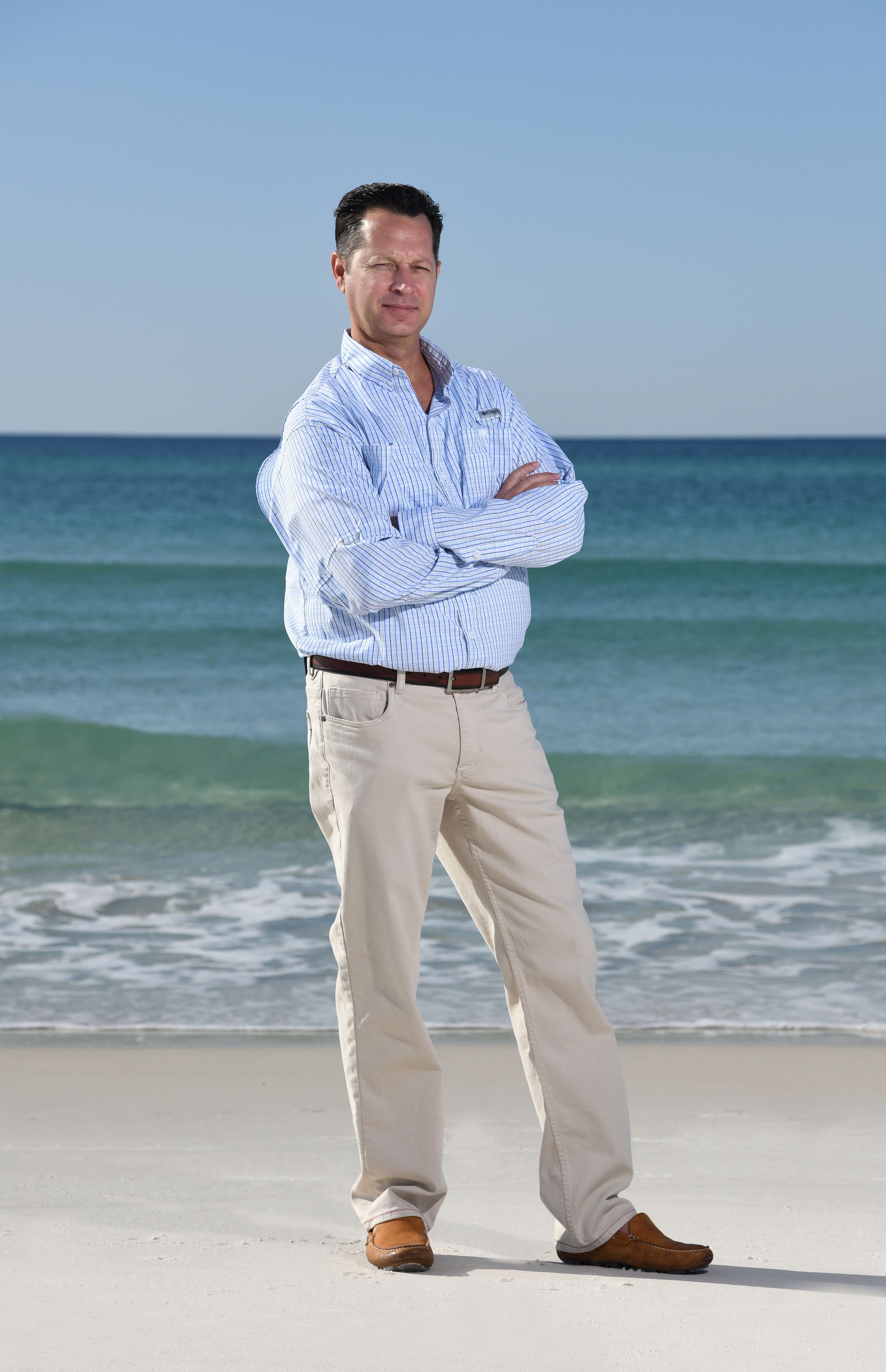
Kinsey Haddock P.A.Kinsey Haddock P.A. is a Broker Associate and REALTOR® with Coldwell Banker Realty, specializing in coastal real estate across the entire Florida Panhandle — from St. George Island and the Forgotten Coast to Panama City Beach, Scenic Highway 30A, and Destin.
