
What Should You Know Before Buying a Home on St. George Island?
St. George Island is one of Florida''s most pristine barrier islands — but buying here requires understanding flood zones, CBRA designations, insurance costs, and a rental market unlike anything on the Emerald Coast. Here''s what every buyer needs to know before making an offer.

St. George Island sits at the eastern edge of the Florida Panhandle, separated from the mainland by Apalachicola Bay and connected by a single bridge. It is one of the most naturally preserved barrier islands on the Gulf Coast — no chain restaurants, no high-rise condos, no resort infrastructure. Just 28 miles of white sand beach, a state park at the east end, and a community of beach houses that has been quietly drawing loyal visitors for decades.
Buying here is different from buying in Panama City Beach, Destin, or even Cape San Blas. The market is smaller, the due diligence is more complex, and the experience of ownership is fundamentally different from the resort markets to the west. If you're considering St. George Island, this guide covers everything you need to understand before you make an offer.
Who Is Kinsey Haddock P.A.?
I'm a licensed Florida REALTOR® and Buyer's Agent with Coldwell Banker Realty — Panhandle, representing buyers across the full Gulf Coast from Panama City Beach and 30A to Destin, Mexico Beach, Cape San Blas, Port St. Joe, and St. George Island. I hold six NAR designations including ABR®, CRS®, and RSPS. License #BK3253849.
St. George Island is one of my favorite markets on the Forgotten Coast — and one of the most technically complex for buyers to navigate without experienced representation.
The Island at a Glance
St. George Island is a barrier island in Franklin County, Florida. It is approximately 28 miles long and accessible only via the Bryant Patton Bridge from Eastpoint on the mainland. The island has no incorporated municipality — it is governed by Franklin County — and has no commercial development beyond a small cluster of shops and restaurants near the bridge.
The island is divided into three distinct areas:
The West End (Gulf Beaches) — The most developed and most accessible part of the island, closest to the bridge. The majority of vacation rental inventory is concentrated here, along with most of the island's commercial activity.
The Plantation — A gated community in the middle of the island with private beach access, tennis courts, a marina, and deed restrictions that govern architectural standards and use. The Plantation has its own HOA and a different ownership experience from the rest of the island.
The East End — The least developed section of the island, transitioning into the Dr. Julian G. Bruce St. George Island State Park, which protects the eastern 9 miles. Properties here are more remote, more exposed, and more limited in number.
Flood Zones: The Most Important Due Diligence Item
Every property on St. George Island is in a FEMA flood zone. The island is a barrier island — it is surrounded by water on all sides and subject to storm surge, wave action, and flooding from both the Gulf and the bay. Understanding which flood zone a specific property sits in is the single most important piece of due diligence a buyer can do.
AE zones are the most common on St. George Island. These are high-risk flood areas with a 1% annual chance of flooding (the "100-year flood"). Flood insurance is required for federally backed mortgages in AE zones. Base Flood Elevation (BFE) is assigned in AE zones, and the property's elevation relative to BFE directly determines flood insurance premiums.
VE zones are the highest-risk designation — coastal high-hazard areas subject to wave action in addition to flooding. VE zones carry the highest flood insurance premiums and the most restrictive building requirements. Gulf-front properties on St. George Island are frequently in VE zones.
X zones (shaded and unshaded) represent lower flood risk. Flood insurance is not required for federally backed mortgages in X zones, but it is still strongly recommended on a barrier island.
What this means for buyers: Before making an offer, verify the flood zone designation for the specific parcel using FEMA's Flood Map Service Center (msc.fema.gov). Do not rely on the listing agent's representation or the seller's disclosure alone — flood zone designations can change with map revisions, and the difference between an AE and VE designation can mean thousands of dollars per year in insurance premiums.
CBRA Zones on St. George Island
A significant portion of St. George Island — particularly the East End — falls within a Coastal Barrier Resources Act (CBRA) zone. CBRA zones are federally designated areas where the federal government does not provide flood insurance through the National Flood Insurance Program (NFIP), subsidized federal loans, or federal disaster assistance for new construction or substantial improvements.
What this means practically:
- Properties in CBRA zones cannot obtain NFIP flood insurance
- Private flood insurance is available but typically more expensive and harder to obtain
- Conventional financing is available but lenders may require private flood insurance as a condition
- FHA and VA loans are generally not available for properties in CBRA zones
The CBRA boundary on St. George Island runs through the East End. Properties west of the boundary (the West End and most of the Plantation) are generally outside the CBRA zone and eligible for NFIP coverage. Properties east of the boundary — including many of the most remote and naturally beautiful lots — are in the CBRA zone.
Always verify CBRA status using the U.S. Fish & Wildlife Service CBRA mapper before making an offer on any East End property. This is not optional due diligence — it directly affects your ability to finance and insure the property.
Insurance Costs
Insurance is the largest ongoing cost variable for St. George Island buyers, and it has increased significantly since 2020 as Florida's insurance market has contracted.
Wind insurance is typically the largest single insurance cost for Gulf Coast properties. On St. George Island, annual wind premiums for a typical 3–4 bedroom beach house range from:
- $8,000–$18,000/year for properties with favorable construction (post-2002 Florida Building Code, hip roof, impact glass, elevated)
- $15,000–$35,000/year for older construction or properties in higher-exposure locations
Flood insurance costs depend on flood zone, elevation, and whether the property is in a CBRA zone:
- NFIP coverage (available outside CBRA zones): $2,000–$8,000/year for most residential properties; higher for Gulf-front VE zone properties
- Private flood insurance (required in CBRA zones): $4,000–$15,000+/year depending on location and coverage
Combined annual insurance cost for a typical St. George Island beach house: $10,000–$45,000/year, with Gulf-front VE zone properties at the high end and elevated, post-2002 construction in AE zones at the lower end.
Elevation certificates are critical to managing insurance costs. A current elevation certificate showing the property's lowest floor elevation relative to BFE can significantly reduce NFIP premiums. Always request the existing elevation certificate from the seller and have it reviewed by an insurance agent before closing.
Financing on St. George Island
Most St. George Island properties are eligible for conventional financing. However, several factors can complicate the financing process:
CBRA zone properties cannot use FHA or VA loans and may face lender restrictions on conventional financing if private flood insurance is unavailable or prohibitively expensive.
Older construction (pre-1978) may trigger lead paint disclosures and additional inspection requirements. Pre-2002 construction (before the updated Florida Building Code) typically carries higher insurance costs and may affect appraisal values.
Condo financing — there are very few traditional condominiums on St. George Island; most inventory is single-family homes or townhomes. If you are purchasing a unit in a condominium association, verify warrantability with your lender before making an offer.
Jumbo loans are required for purchases above the conforming loan limit (currently $806,500 for most Florida counties). A significant portion of Gulf-front inventory on St. George Island falls in jumbo territory.
Short-Term Rental Rules
Short-term vacation rentals are permitted on most of St. George Island, and the island has a well-established vacation rental market. Franklin County does not have a blanket prohibition on short-term rentals, and most residential properties outside the Plantation can be rented on a nightly or weekly basis.
The Plantation has its own deed restrictions and HOA rules that govern rental activity. Some sections of the Plantation have minimum rental periods or other restrictions. Verify the specific rental rules for any Plantation property before purchasing with rental income in mind.
Franklin County requires vacation rental registration and collection of the county's tourist development tax (currently 5%). Property management companies operating on the island handle this automatically for managed properties.
The Rental Market
St. George Island has one of the most loyal vacation rental markets on the Gulf Coast. Visitors return year after year, and the island's natural character — the state park, the undeveloped beaches, the absence of resort infrastructure — is the draw rather than a limitation.
Typical gross annual rental income:
- 2BR/2BA Gulf-view: $30,000–$55,000
- 3BR/2BA Gulf-view: $45,000–$75,000
- 3BR/3BA Gulf-front: $70,000–$110,000
- 4BR/4BA Gulf-front: $90,000–$150,000
- 5BR+ Gulf-front: $120,000–$200,000+
These figures are gross revenue before property management fees (typically 20–30%), platform fees, cleaning, maintenance, and taxes. Net income after all expenses typically runs 50–65% of gross for well-managed properties.
The rental season on St. George Island is somewhat shorter than PCB or Destin — peak demand is concentrated in summer (June–August) and spring break, with shoulder season demand in April–May and September–October. Winter occupancy is lower than the Emerald Coast markets.
What Inspections Should You Order?
St. George Island beach houses require a more thorough inspection scope than typical residential properties. Order all of the following:
General home inspection — foundation, structure, roof, mechanical systems, plumbing, electrical. Pay particular attention to the condition of the pilings on elevated homes and any signs of wood rot, termite damage, or corrosion from the salt air environment.
Wind mitigation inspection — documents construction features (roof shape, roof covering, opening protection, roof-to-wall connections) that determine wind insurance premiums. This inspection pays for itself immediately in insurance savings.
Elevation certificate — if the seller does not have a current one, order a new survey. This is required for accurate flood insurance quoting and may be required by your lender.
Termite/WDO inspection — wood-destroying organism inspection is standard in Florida and particularly important in the coastal environment.
Septic inspection — most St. George Island properties are on septic systems rather than municipal sewer. A full septic inspection including pumping and camera inspection of the drain field is essential.
Seawall/dock inspection (if applicable) — if the property has bay-front or canal frontage with a seawall or dock, have it inspected by a marine contractor. Seawall repair and replacement is expensive.
FAQ
Is St. George Island a good place to buy a vacation home?
St. George Island is an excellent choice for buyers who value natural beauty, a loyal rental market, and a fundamentally different character from the resort markets on the Emerald Coast. The island's preserved beaches, state park, and absence of commercial development are its defining appeal. The trade-offs are higher insurance costs than inland markets, CBRA zone complexity on the East End, and a rental season that is somewhat shorter than PCB or Destin.
How much does a beach house on St. George Island cost?
Gulf-front homes on St. George Island range from approximately $700,000 for older, smaller properties to $2,500,000+ for newer, larger Gulf-front homes. Gulf-view and interior properties range from $280,000 to $700,000. The Plantation commands a premium for its amenities and gated character.
Do I need flood insurance on St. George Island?
Yes — virtually all properties on St. George Island are in FEMA flood zones, and flood insurance is required for federally backed mortgages in high-risk zones. Even where not required, flood insurance is strongly recommended on a barrier island. Properties in CBRA zones on the East End cannot obtain NFIP coverage and must use private flood insurance.
What is the Plantation on St. George Island?
The Plantation is a gated community in the middle of St. George Island with private beach access, a marina, tennis courts, and deed restrictions governing architectural standards and use. It has its own HOA with monthly fees and rules that differ from the rest of the island. Some sections have rental restrictions — verify before purchasing with rental income in mind.
Can I build a new home on St. George Island?
Yes, vacant lots are available on St. George Island and new construction is permitted subject to Franklin County building codes and FEMA flood zone requirements. Elevated construction (pilings) is required in VE zones and strongly recommended in AE zones. CBRA zone lots on the East End cannot use federal flood insurance or financing, which limits the buyer pool for resale.
How do I find a buyer's agent for St. George Island?
Work with a buyer's agent who has specific experience on St. George Island and the Forgotten Coast — the market's CBRA zones, Franklin County regulations, and insurance complexity require local knowledge that agents based in PCB or Destin may not have. I represent buyers across the full Forgotten Coast including St. George Island. Visit emeraldcoastbuyersguide.com/contact to get started.
Found this helpful? Share it with someone buying on the Emerald Coast.
Ready to take the next step?
Let's Talk — I'd Love to Help
Kinsey Haddock · Coldwell Banker Realty
Whether you're buying, selling, or just exploring your options on the Emerald Coast, I'm here to answer every question — no pressure, no obligation.
Written by
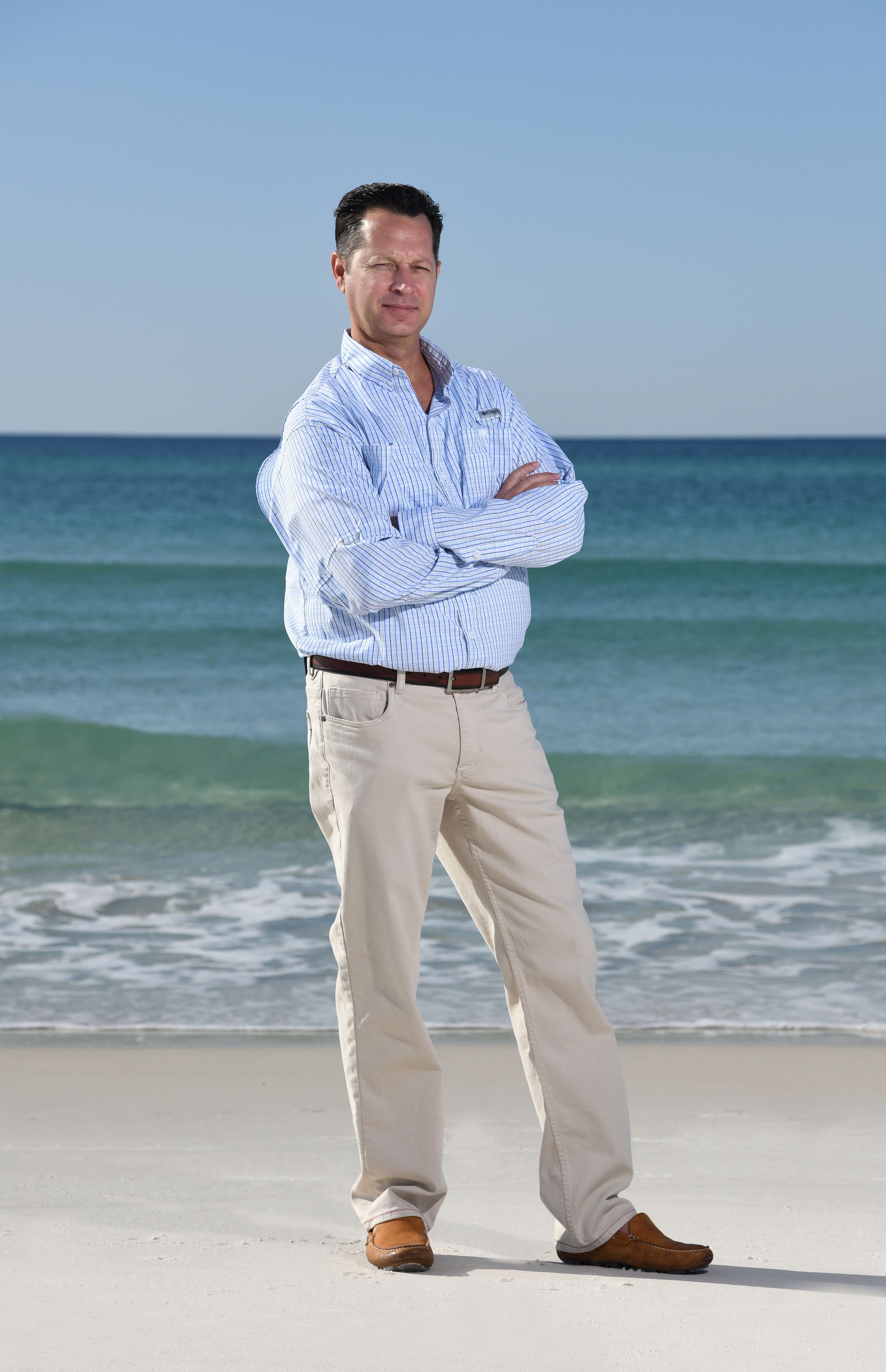
Kinsey Haddock P.A.Kinsey Haddock P.A. is a Broker Associate and REALTOR® with Coldwell Banker Realty, specializing in coastal real estate across the entire Florida Panhandle — from St. George Island and the Forgotten Coast to Panama City Beach, Scenic Highway 30A, and Destin.