
Can You Build on a Vacant Lot on St. George Island?
Vacant lots are available on St. George Island — but building on a barrier island involves FEMA flood zone requirements, CBRA designations, Franklin County permitting, and elevated construction standards that every buyer needs to understand before purchasing land.

Vacant lots on St. George Island represent one of the most compelling opportunities on the Forgotten Coast — the chance to build a custom beach house on one of Florida's most pristine barrier islands, designed exactly the way you want it. But building on a barrier island is not the same as building anywhere else. FEMA flood zone requirements, CBRA designations, elevated construction standards, and Franklin County permitting all shape what you can build, where you can build it, and what it will cost.
Here's what every lot buyer on St. George Island needs to know before they make an offer.
Who Is Kinsey Haddock P.A.?
I'm a licensed Florida REALTOR® and Buyer's Agent with Coldwell Banker Realty — Panhandle, representing buyers across the Forgotten Coast including St. George Island. License #BK3253849.
Yes — But With Important Conditions
You can build on a vacant lot on St. George Island, subject to Franklin County zoning and building codes, FEMA flood zone requirements, and — critically — CBRA zone status. The conditions that apply to your specific lot depend on where it is located on the island.
CBRA Zone Status: The First Thing to Check
Before making an offer on any vacant lot on St. George Island, verify whether it falls within a Coastal Barrier Resources Act (CBRA) zone.
CBRA zone lots:
- Cannot receive federal flood insurance (NFIP) for any structure built on them
- Cannot receive federal loans (FHA, VA, USDA) for construction financing
- Cannot receive federal disaster assistance for structures built after the CBRA designation
- Private flood insurance is required — more expensive and harder to obtain
- The buyer pool for resale is significantly smaller
Non-CBRA lots (most of the West End and the Plantation) are eligible for NFIP flood insurance and conventional financing, including construction loans.
The CBRA boundary on St. George Island runs through the East End. Most West End lots and Plantation lots are outside the CBRA zone. Most East End lots are inside it. Verify using the U.S. Fish & Wildlife Service CBRA mapper — do not rely on the seller's representation.
Flood Zone Requirements
Every lot on St. George Island is in a FEMA flood zone. The flood zone designation determines:
Minimum floor elevation. In AE zones, the lowest floor of any new construction must be at or above the Base Flood Elevation (BFE). In VE zones — coastal high-hazard areas subject to wave action — the lowest floor must be elevated to the BFE plus freeboard (typically 1–2 feet above BFE per local ordinance), and the structure must be on open foundations (pilings or columns) that allow wave action to pass beneath.
Foundation type. VE zone construction requires open foundations — pilings or columns — that do not obstruct wave action. Solid foundation walls (stem walls, slab-on-grade) are not permitted in VE zones. AE zone construction can use either open foundations or solid foundations, but elevated construction on pilings is strongly recommended for insurance cost reasons.
Enclosures below BFE. Any enclosed space below the BFE in an AE zone must be used only for parking, building access, or storage, and must have flood vents. Enclosed living space below BFE is not permitted. In VE zones, no enclosed space is permitted below the BFE.
Practical implication: On St. George Island, virtually all new construction is elevated on pilings. The piling height required depends on the BFE at the specific lot location and the local freeboard requirement. A lot with a BFE of 12 feet NAVD88 in a VE zone might require the lowest floor to be at 14 feet NAVD88 — meaning the pilings extend 14+ feet above sea level before the floor structure begins.
Franklin County Permitting and Zoning
Franklin County governs land use and building permits on St. George Island. Key requirements:
Zoning: Most residential lots on St. George Island are zoned for single-family residential use. Verify the zoning designation for any lot before purchasing.
Setbacks: Franklin County requires minimum setbacks from the Gulf, the bay, property lines, and the dune line. Gulf-front lots have the most restrictive setbacks — the Coastal Construction Control Line (CCCL) administered by the Florida Department of Environmental Protection limits construction within a certain distance of the mean high water line.
CCCL permits: Construction seaward of the CCCL requires a permit from the Florida DEP in addition to the Franklin County building permit. This adds time and complexity to the permitting process for Gulf-front lots.
Septic systems: Most St. George Island lots are not served by municipal sewer. A new septic system must be designed and permitted as part of the construction project. The lot must have adequate area for the septic system and drain field, which can be a constraint on smaller lots.
Utility connections: Verify the availability of electric, water, and telecommunications service to the lot before purchasing. Most developed areas of the island have utility infrastructure; more remote East End lots may require utility extensions.
Construction Costs on St. George Island
Building on a barrier island costs more than building inland. Elevated construction on pilings, impact-resistant windows and doors, and the logistics of delivering materials to an island all add to construction costs.
Typical construction cost ranges for new beach houses on St. George Island:
- Basic elevated construction: $200–$280/square foot
- Mid-range construction with quality finishes: $280–$380/square foot
- High-end custom construction: $380–$550+/square foot
A 2,000 square foot beach house at mid-range construction quality costs approximately $560,000–$760,000 to build, not including the lot. Add the lot cost ($200,000–$800,000+ depending on location and Gulf frontage) and you're looking at a total project cost of $760,000–$1,560,000+ for a new Gulf-view or Gulf-front home.
Construction timeline: Permitting and construction on St. George Island typically takes 18–30 months from lot purchase to occupancy, depending on permitting complexity and contractor availability.
Insurance for New Construction
New construction on St. George Island has a significant insurance advantage over older properties: post-2002 Florida Building Code construction with a hip roof, impact glass, and elevated pilings qualifies for the lowest available wind insurance premiums. A new home built to current code will cost substantially less to insure than a comparable older home.
Flood insurance for new construction is determined by the elevation of the lowest floor relative to BFE. Building the lowest floor as high above BFE as the design allows — not just at the minimum required elevation — reduces flood insurance premiums meaningfully. Every foot above BFE reduces the NFIP premium.
Due Diligence for Lot Buyers
Before making an offer on a vacant lot on St. George Island:
- Verify CBRA zone status using the U.S. Fish & Wildlife Service CBRA mapper
- Verify flood zone designation using FEMA's Flood Map Service Center
- Obtain a survey showing the lot boundaries, setbacks, and CCCL location
- Verify zoning with Franklin County
- Confirm utility availability — electric, water, telecommunications
- Assess septic feasibility — consult a septic engineer about system design and drain field requirements
- Get a construction cost estimate from a contractor experienced with barrier island construction
- Get insurance quotes for the planned construction from a coastal insurance specialist
FAQ
Can you build a new home on St. George Island?
Yes — vacant lots are available and new construction is permitted subject to Franklin County building codes, FEMA flood zone requirements, and CBRA zone status. Virtually all new construction on the island is elevated on pilings to meet flood zone requirements.
What is the CCCL and how does it affect building on St. George Island?
The Coastal Construction Control Line (CCCL) is a line established by the Florida Department of Environmental Protection that limits construction within a certain distance of the mean high water line. Construction seaward of the CCCL requires a DEP permit in addition to the Franklin County building permit. Gulf-front lots are most affected.
Can you build on a CBRA zone lot on St. George Island?
You can build on a CBRA zone lot, but you cannot obtain NFIP flood insurance or federal financing for the structure. Private flood insurance is required and more expensive. The buyer pool for resale is smaller. CBRA zone lots on the East End are generally less desirable for investment purposes than non-CBRA lots on the West End.
How long does it take to build a new home on St. George Island?
Permitting and construction typically takes 18–30 months from lot purchase to occupancy, depending on permitting complexity, contractor availability, and the scope of the project.
What does it cost to build a beach house on St. George Island?
Construction costs for elevated beach houses on St. George Island typically run $200–$550+/square foot depending on quality level. A 2,000 square foot mid-range home costs approximately $560,000–$760,000 to build, not including the lot.
How do I find a buyer's agent for vacant lots on St. George Island?
Work with a buyer's agent who understands CBRA zones, flood zone requirements, and Franklin County permitting — the complexity of lot purchases on a barrier island requires local knowledge. I represent buyers across St. George Island and the full Forgotten Coast. Visit emeraldcoastbuyersguide.com/contact to get started.
Found this helpful? Share it with someone buying on the Emerald Coast.
Ready to take the next step?
Let's Talk — I'd Love to Help
Kinsey Haddock · Coldwell Banker Realty
Whether you're buying, selling, or just exploring your options on the Emerald Coast, I'm here to answer every question — no pressure, no obligation.
Written by
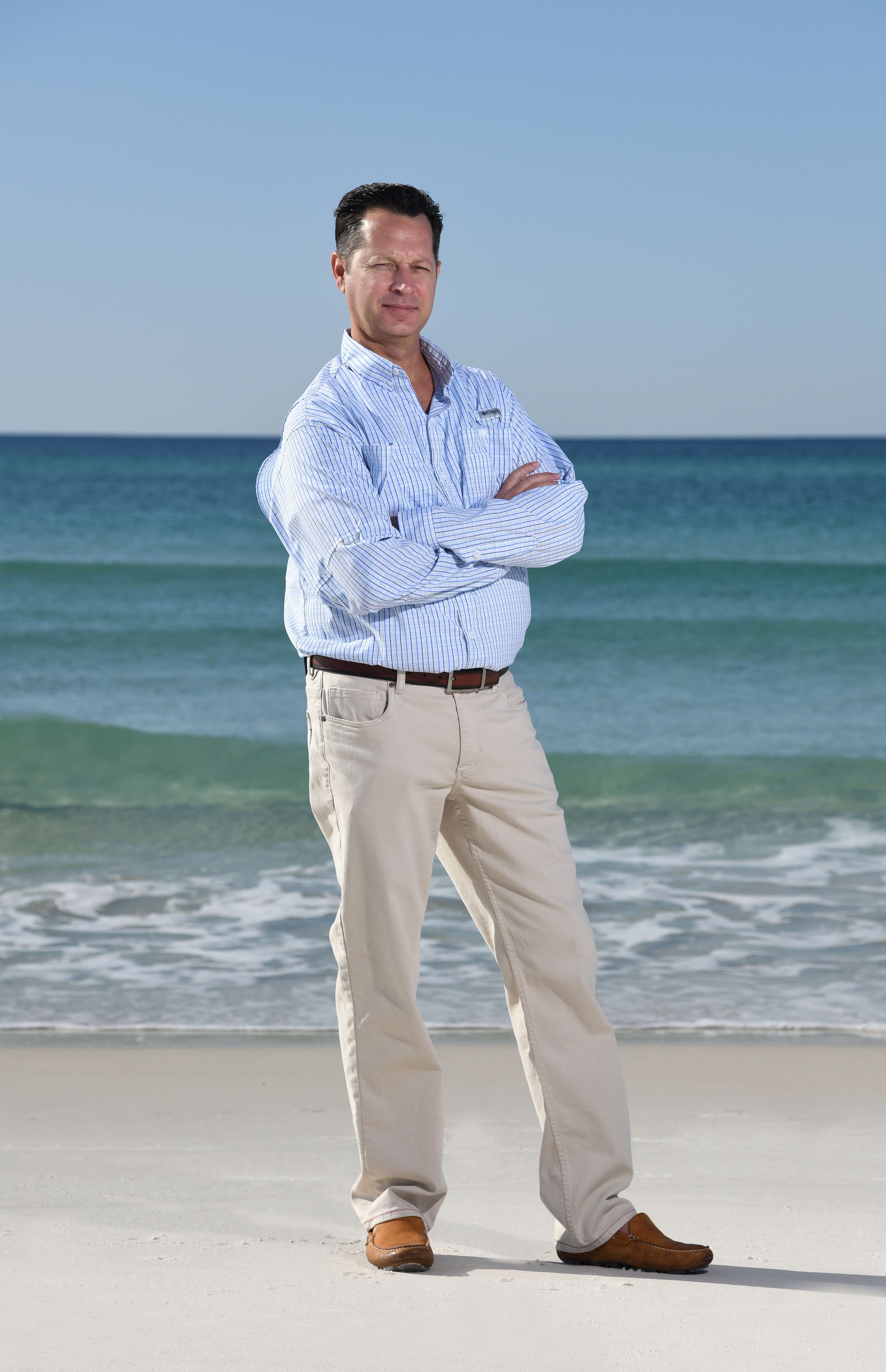
Kinsey Haddock P.A.Kinsey Haddock P.A. is a Broker Associate and REALTOR® with Coldwell Banker Realty, specializing in coastal real estate across the entire Florida Panhandle — from St. George Island and the Forgotten Coast to Panama City Beach, Scenic Highway 30A, and Destin.