
Can You Use a Panama City Beach Condo as a Vacation Rental?
Short answer: yes — but not every condo allows it, and the rules vary significantly by building. Here''s what buyers need to know about vacation rental restrictions, HOA rules, city licensing, and what to look for before buying a Panama City Beach condo as an investment.

Panama City Beach is one of the strongest vacation rental markets in the Southeast United States. Twelve months of rental demand, a growing shoulder season, and some of the most affordable Gulf-front condo prices on the Florida Panhandle make it an attractive target for buyers who want a beach property that pays for itself. But one of the most common mistakes I see buyers make is falling in love with a specific building — and only discovering after they're under contract that short-term rentals aren't allowed.
The answer to "can I use this condo as a vacation rental?" is almost never a simple yes or no. It depends on the building, the HOA, the city, and how you define "short-term." Here's how to get the right answer before you make an offer.
Who Is Kinsey Haddock P.A.?
I'm a licensed Florida REALTOR® and Buyer's Agent with Coldwell Banker Realty — Panhandle. I hold six NAR designations including ABR®, CRS®, and RSPS, and I specialize in helping out-of-state buyers navigate the Panama City Beach condo market — including buyers who want investment properties with vacation rental income potential. License #BK3253849.
Rental restrictions are one of the first things I research for every PCB condo buyer I work with. Getting this wrong is expensive.
The Three Layers of Vacation Rental Rules
Before you can answer whether a specific condo can be used as a vacation rental, you need to understand that the rules come from three separate sources — and all three have to allow it.
1. The HOA or condo association's governing documents 2. City of Panama City Beach ordinances 3. Florida state law
All three have to permit short-term rentals for you to legally operate one. Most of the variation — and most of the surprises — comes from layer one.
Layer 1: HOA and Condo Association Rules
This is where buyers get surprised most often. Condo associations in Panama City Beach have wide latitude to restrict or prohibit short-term rentals in their governing documents — the Declaration of Condominium, the Bylaws, and the Rules and Regulations.
What the documents might say:
- No rental restrictions — You can rent to anyone, for any duration, as often as you want. These are the buildings buyers looking for investment properties want to find.
- Minimum rental period — Common restrictions include 7-day minimums, 30-day minimums, or 90-day minimums. A 30-day minimum effectively eliminates Airbnb and VRBO-style vacation rentals. A 7-day minimum still allows vacation rental activity but cuts out weekend-only bookings.
- Maximum number of rentals per year — Some associations cap how many times per year a unit can be rented, regardless of duration.
- Owner-occupied only — Some buildings prohibit all rentals entirely. These are typically full-time residential buildings, not vacation properties.
- Rental registration requirements — Some associations require you to register tenants, provide contact information for a local property manager, or obtain association approval before renting.
How to find out: Request a copy of the Declaration of Condominium and Rules and Regulations before making an offer. Your real estate attorney or title company will review these during due diligence, but I pull them as early as possible — ideally before you're emotionally invested in a unit.
Important: HOA rules can change. An association that currently allows short-term rentals can vote to restrict them in the future. Florida law (§718.110) requires a supermajority vote to change rental restrictions, and existing owners who purchased in reliance on the rental policy have some protections — but this is a real risk in buildings where owner sentiment is shifting.
Layer 2: City of Panama City Beach Vacation Rental Ordinances
Panama City Beach has a vacation rental licensing and registration program. If you operate a short-term rental (defined as a rental of less than 30 days) in PCB, you are required to:
- Obtain a City of Panama City Beach vacation rental license — Annual fee, requires proof of insurance, a local contact person available 24/7, and compliance with occupancy limits
- Collect and remit tourist development tax — Bay County charges a 5% tourist development tax on short-term rental revenue. Most property management companies and platforms like Airbnb and VRBO collect and remit this automatically, but if you self-manage, it's your responsibility
- Comply with occupancy limits — PCB limits occupancy based on the number of bedrooms. Exceeding posted occupancy limits is a violation
- Maintain a local contact — Someone reachable 24/7 who can respond to complaints or issues at the property
The city has increased enforcement of vacation rental regulations in recent years. Operating without a license or violating occupancy rules can result in fines and license revocation.
Bay County Tourist Development Tax: In addition to the city license, short-term rental operators in Bay County must register with the Bay County Tax Collector and remit the 5% tourist development tax on all rentals under 6 months. Again — most platforms handle this automatically, but verify before you assume.
Layer 3: Florida State Law
Florida has been generally favorable to vacation rental operators at the state level. A 2011 state law (§509.032) preempted local governments from banning vacation rentals outright or regulating them more strictly than the state — though this has been modified and litigated over the years.
The practical takeaway for PCB buyers: Florida state law is not the limiting factor. The city and the HOA are where the real restrictions live.
Which PCB Buildings Allow Vacation Rentals?
Panama City Beach has hundreds of condo buildings, and rental policies vary widely. Rather than a comprehensive list (which changes as associations update their rules), here's how to categorize what you'll find:
Purpose-built vacation rental buildings: These are the high-rise Gulf-front towers that were developed specifically as vacation rental properties — Emerald Beach Resort, Calypso Resort, Laketown Wharf, Splash Resort, and many others. Their governing documents were written to allow short-term rentals, and the entire building operates as a vacation rental community. These are the clearest path for investment buyers.
Mixed-use buildings: Some buildings have a mix of full-time residents and vacation rental owners. These buildings may allow short-term rentals but often have more rules — quiet hours, elevator restrictions during peak season, parking limits. The rental income potential is real, but the community dynamics are different.
Residential-only buildings: Some PCB condo buildings — particularly those farther from the beach or in more residential areas — prohibit short-term rentals entirely. These are appropriate for buyers who want a personal vacation home or a long-term rental, not a vacation rental investment.
The due diligence question to ask: "What is the minimum rental period allowed under the current Declaration of Condominium?" If the answer is 7 days or less, you have a vacation rental-eligible building. If it's 30 days or more, you don't.
Vacation Rental Income Potential in PCB
For buildings that do allow short-term rentals, Panama City Beach is one of the strongest performing markets on the Gulf Coast. Here's a realistic picture of what to expect:
Seasonality: PCB has a longer rental season than most Gulf Coast markets. Spring break (March–April), summer (June–August), and a growing fall season (September–October) drive the bulk of revenue. Winter is slower but not dead — PCB attracts snowbirds and long-term winter renters.
Gross rental revenue by unit type (Gulf-front, well-managed):
- Studio / efficiency: $25,000–$40,000/year
- 1-bedroom: $35,000–$55,000/year
- 2-bedroom: $55,000–$85,000/year
- 3-bedroom: $75,000–$120,000/year
- 4-bedroom penthouse: $100,000–$180,000+/year
These are gross figures before management fees, platform fees, maintenance, and HOA costs. Net rental income after expenses typically runs 50–65% of gross.
What drives performance:
- Gulf-front or Gulf-view units command 30–50% premiums over comparable units without water views
- Buildings with pools, lazy rivers, and resort amenities outperform basic buildings
- Units with private balconies facing the Gulf consistently outperform interior or parking-view units
- Professional management and strong review profiles make a measurable difference — typically 15–25% more revenue than self-managed units with no review history
What to Look for When Buying a PCB Vacation Rental Condo
Beyond the rental restriction question, here's the full checklist I walk investment buyers through:
Rental history: Ask for the actual rental income history for the specific unit — not the building average, not the management company's projection. Real numbers from the last 2–3 years tell you what the unit actually performs, not what it could theoretically earn.
Management company relationships: Many PCB buildings have preferred or exclusive on-site management companies. Understand the fee structure (typically 20–30% of gross revenue) and whether you're required to use them or can self-manage or use an outside company.
HOA financials and reserves: Request the most recent reserve study and the current reserve funding percentage. Post-Surfside legislation (SB 4-D) requires condos three stories or taller to fund reserves based on structural integrity reserve studies. Underfunded reserves in older buildings mean special assessments — sometimes $10,000–$50,000+ per unit.
Building age and condition: PCB has a lot of condo inventory built in the 1980s and 1990s. These buildings can be great investments, but they carry higher insurance costs, more maintenance, and greater special assessment risk than newer construction. Buildings constructed after 2002 comply with Florida's updated building code and carry lower wind insurance premiums.
Insurance costs: Gulf-front condo buildings in PCB carry significant wind and flood insurance costs. The master policy covers the building structure; your HO-6 covers your interior. Ask for the current master policy premium and the per-unit assessment — it's part of your HOA fee calculation.
Rental license transferability: In PCB, vacation rental licenses are issued to the property, not the owner. When you purchase a unit with an existing rental license in good standing, you can typically transfer it. Confirm this with the city before closing.
The Bottom Line for Investment Buyers
Panama City Beach is a legitimate vacation rental market with real income potential — but the investment thesis only works if you buy in the right building. The difference between a building with no rental restrictions and one with a 30-day minimum is the difference between a performing investment and a property that can only generate long-term rental income.
Do the homework before you fall in love with a unit. Pull the governing documents. Verify the rental history. Understand the HOA financials. And work with a buyer's agent who knows which buildings perform and which ones have hidden landmines.
That's exactly what I do for every PCB investment buyer I represent.
FAQ
Can you rent a condo on Airbnb in Panama City Beach?
Yes — but only in buildings whose governing documents allow short-term rentals. Many PCB condo buildings were purpose-built as vacation rental properties and explicitly permit Airbnb and VRBO-style rentals. Others have minimum rental periods of 30 days or more, which effectively prohibits vacation rental activity. Always verify the Declaration of Condominium before making an offer.
Do you need a license to rent a condo on Airbnb in Panama City Beach?
Yes. The City of Panama City Beach requires a vacation rental license for any rental of less than 30 days. You'll also need to collect and remit Bay County's 5% tourist development tax on all short-term rental revenue. Most platforms like Airbnb and VRBO collect and remit the tax automatically, but the city license is your responsibility.
How much can a Panama City Beach condo earn as a vacation rental?
A well-positioned Gulf-front 2-bedroom condo in a purpose-built vacation rental building can generate $55,000–$85,000 in gross annual rental revenue. After management fees, platform fees, HOA costs, insurance, and maintenance, net income typically runs 50–65% of gross. Gulf-front units with resort amenities and strong review profiles perform at the high end of the range.
What is the minimum rental period for PCB condos?
It varies by building. Purpose-built vacation rental buildings typically have no minimum or a 3–7 day minimum. Residential-leaning buildings may require 30-day, 60-day, or 90-day minimums. The minimum rental period is set in the Declaration of Condominium — request this document before making an offer on any investment property.
Can a condo HOA change its rental rules after I buy?
Yes — but Florida law (§718.110) requires a supermajority vote to change rental restrictions, and owners who purchased in reliance on the existing rental policy have some protections. This is a real risk in buildings where owner sentiment is shifting toward more restrictions. It's one reason I recommend purpose-built vacation rental buildings for investment buyers — the entire owner base has a financial interest in maintaining rental-friendly rules.
What should I look for in a PCB condo for vacation rental investment?
The most important factors are: (1) governing documents that allow short-term rentals with no or minimal minimum rental period, (2) actual rental income history for the specific unit, (3) Gulf-front or Gulf-view location with resort amenities, (4) healthy HOA reserves to avoid special assessments, and (5) a building constructed after 2002 for lower insurance costs. I walk every investment buyer I represent through this checklist before we make an offer.
Is Panama City Beach a good market for vacation rental investment?
Yes — PCB is one of the strongest vacation rental markets on the Gulf Coast. It has a longer rental season than most comparable markets, strong spring break and summer demand, and growing shoulder season bookings. Gulf-front condo prices are more affordable than comparable properties in 30A or Destin, which improves the yield math. The key is buying in the right building with the right unit characteristics.
Found this helpful? Share it with someone buying on the Emerald Coast.
Ready to take the next step?
Let's Talk — I'd Love to Help
Kinsey Haddock · Coldwell Banker Realty
Whether you're buying, selling, or just exploring your options on the Emerald Coast, I'm here to answer every question — no pressure, no obligation.
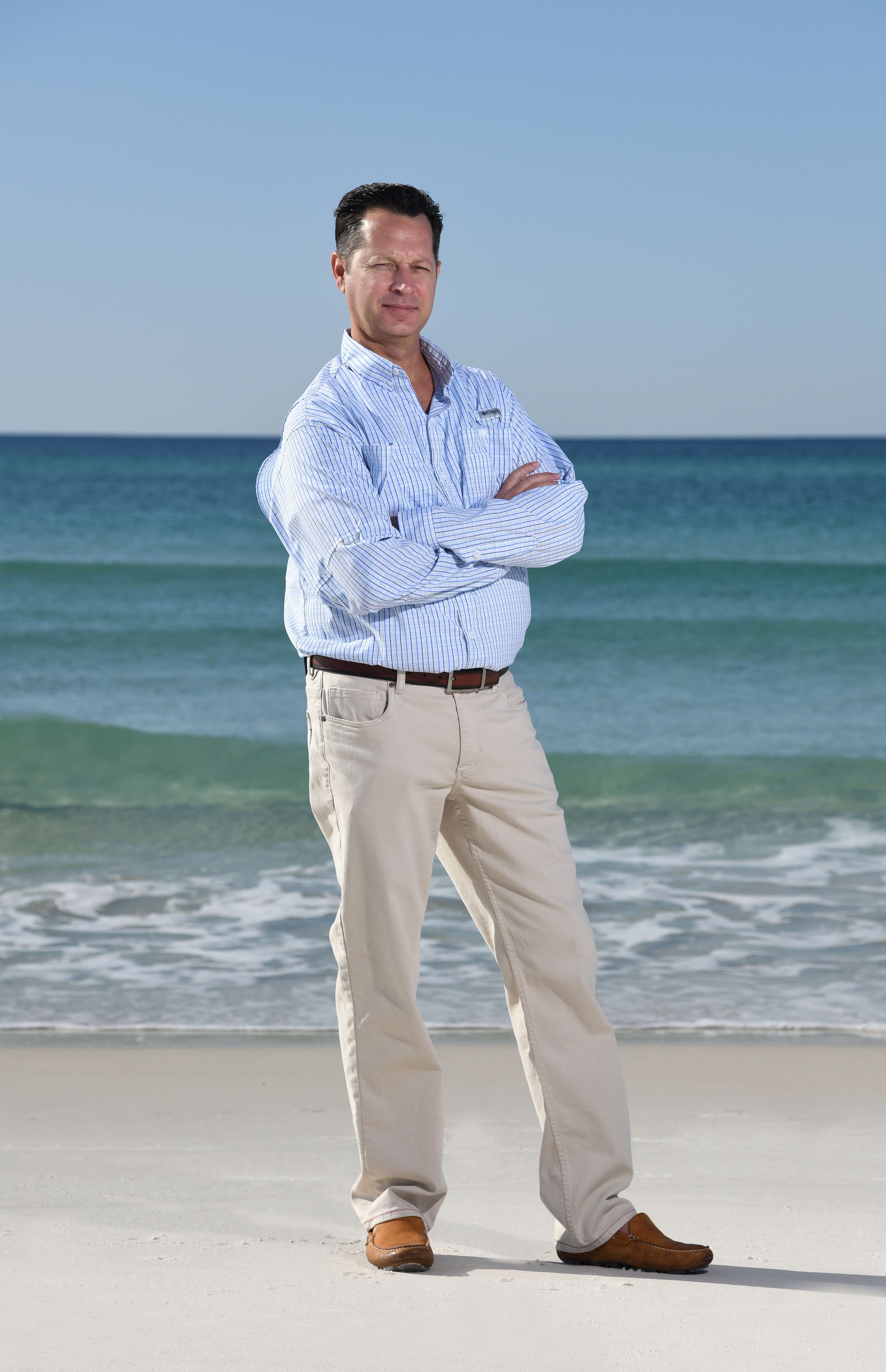
Written by
Kinsey Haddock P.A.Kinsey Haddock P.A. is a Broker Associate and REALTOR® with Coldwell Banker Realty, specializing in coastal real estate across the entire Florida Panhandle — from St. George Island and the Forgotten Coast to Panama City Beach, Scenic Highway 30A, and Destin.